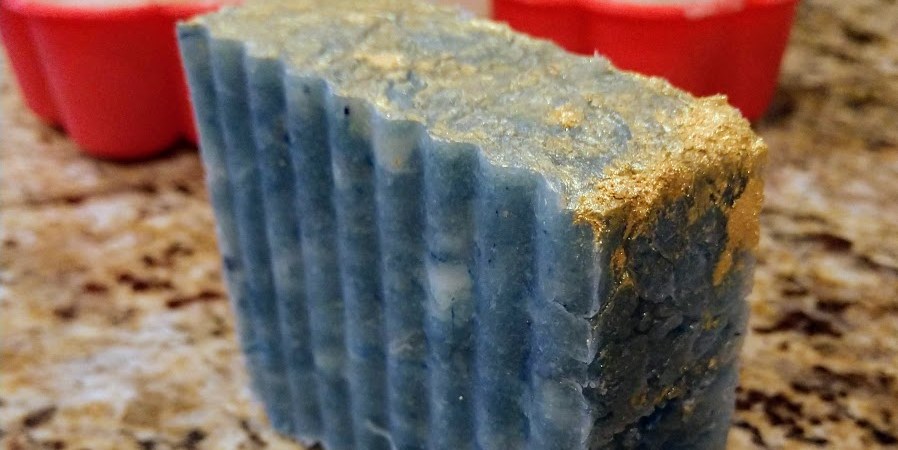
It’s that time again. Here’s a long list of related soap recipes and a quick comparison of two online lye calculators.
The first batch of soap for Christmas was a brown olive oil based vegetarian bar with happy sprinkles of espresso, cocoa, cinnamon and vanilla, in a recipe I didn’t bother to write down. I was testing out my new giant crockpot. 7 quarts is giant when you’ve been volcano-ing soap up over the edges of a 4 quart one for a couple of years.
The next batch of Christmas soap was a pleasing yellow without any colorant added at all, scented with bergamot.
- 497 g olive oil
- 150 g unrefined shea butter
- 170 g coconut oil
- 100 g jojoba oil
- 56 g castor oil
- 354 mL distilled water
- 123g lye (sodium hydroxide)
Today’s batch is my first adventure into mica colorants for soap. I’m starting with
- 232 g unrefined shea butter
- 99 g sweet almond oil
- 54 g castor oil
- 287 g coconut oil
- 304 g olive oil
- 352 mL distilled water
- 134g lye
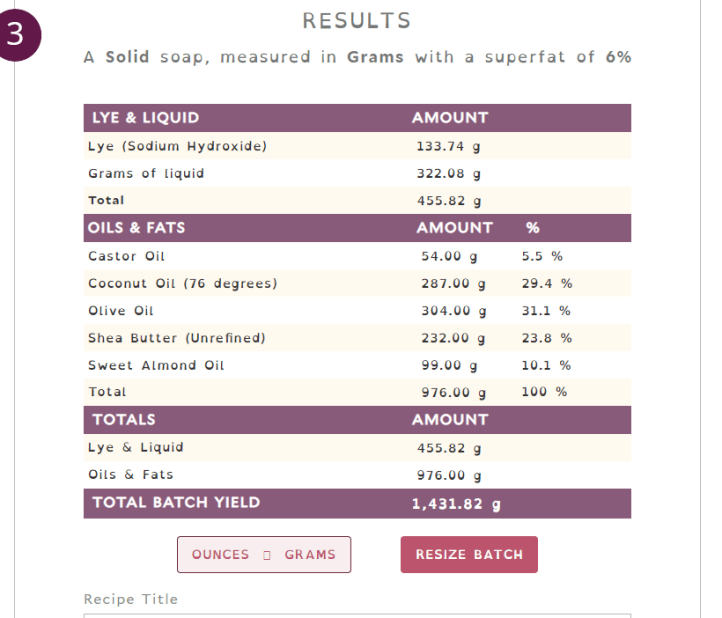
I ran this recipe through both The Sage and Brambleberry and the results below explain why I don’t bother to own a scale that measures precisely to any part of a gram.
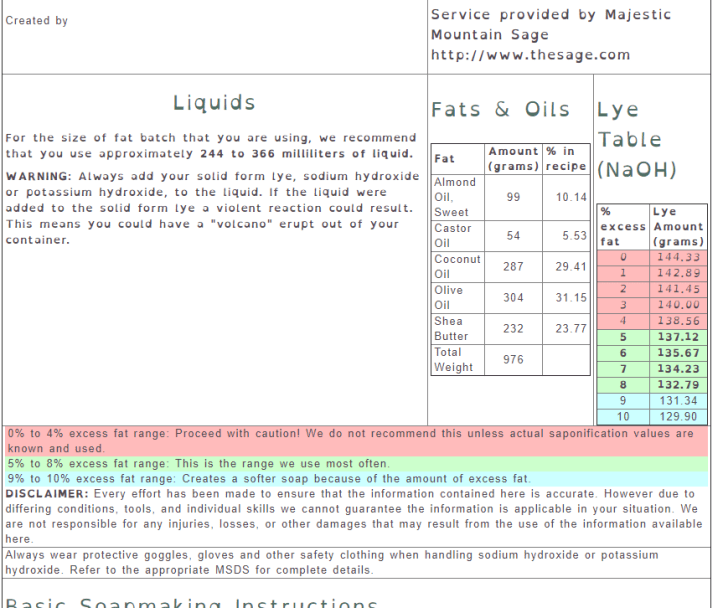
For 6 % superfat, one tells me that I need 135.67 g of lye and 244 to 366 mL of water.
The other one wants 133.74 g of lye and 322.08 g of water for the same superfat percentage.
The truth is that we don’t know, precisely, the content of every single kind of fat we’re using. What we have are textbook approximations. They’re close enough, and that’s why we always aim to leave some extra fat in the soap, aside from the skin moisturizing loveliness of it.
For lye to dissolve, there has to be twice as much water by mass as lye. That’s the only science to it, the rest of how much extra you’d like to work with is more art. Extra liquid will dry out as your soap cures anyway. I tend towards the upper end of the liquid recommendation just because I don’t want to stir the lye any longer than I have to. Having a bit extra makes that process go faster and easier and with less splashing.
Once everything was cooked, I put in clove oil and mica powder pigment in a nice pink shade. Because my soap base isn’t clear, it’s not going to be spectacular, but it’s still warm and cheery. The yellowy color of this recipe causes the pink to look a bit like the Smarties that get colored with beet root. The chocolate ones, not those awful powdery things. This turned out to be a pretty soft, moisturizing bar of soap.
Next batch:
- 175 g sweet almond oil
- 155 g jojoba oil
- 365 g coconut oil
- 50 g castor oil
- 301 g olive oil
- 136 g lye
- 342 mL water
This batch had a close encounter with some mica colorant. We now call it Unicorn Poo.
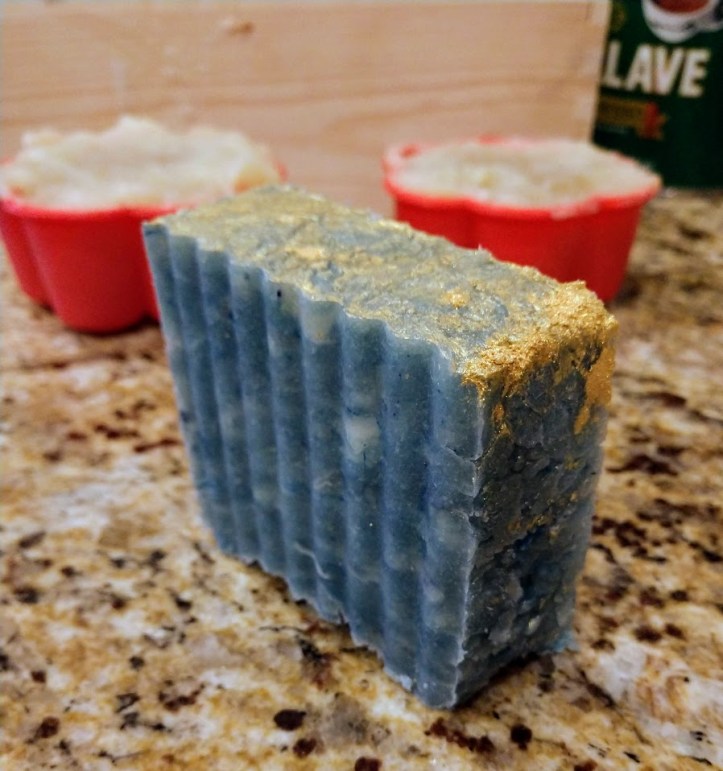
But it’s Christmastime, so we’re gonna keep going.
- 539 g coconut oil
- 350 g cocoa butter
- 231 g sweet almond oil
- 77 g castor oil
- 174 g lye
- 402 mL distilled water
And the closely related:
- 219 g olive oil
- 311 g cocoa butter
- 307 g coconut oil
- 161 g jojoba oil
- 64 g castor oil
- 108 g sweet almond oil
- 151 g lye
- 411 mL distilled water
And the starting to look really familiar:
- 308 g olive oil
- 283 g coconut oil
- 181 g sweet almond oil
- 105 g jojoba oil
- 49 g castor oil
- 184 g cocoa butter
- 146 g lye
- 394 mL water
 Pirate Astronaut Chicken Farmer